
+1 (917) 352-1191
Phone number
info@tuckpointingnyc.com
Email address
2 W 46th St, New York, NY 10036
Address location
If you own a brownstone, rowhouse, or brick building anywhere in New York City, tuckpointing can be an important maintenance project for protecting the exterior. NYC Tuck Pointing provides this specialised brick-joint service throughout all five boroughs, from individual brownstones to apartment buildings and commercial properties.
Call (917) 352-1191 For A Free Inspection
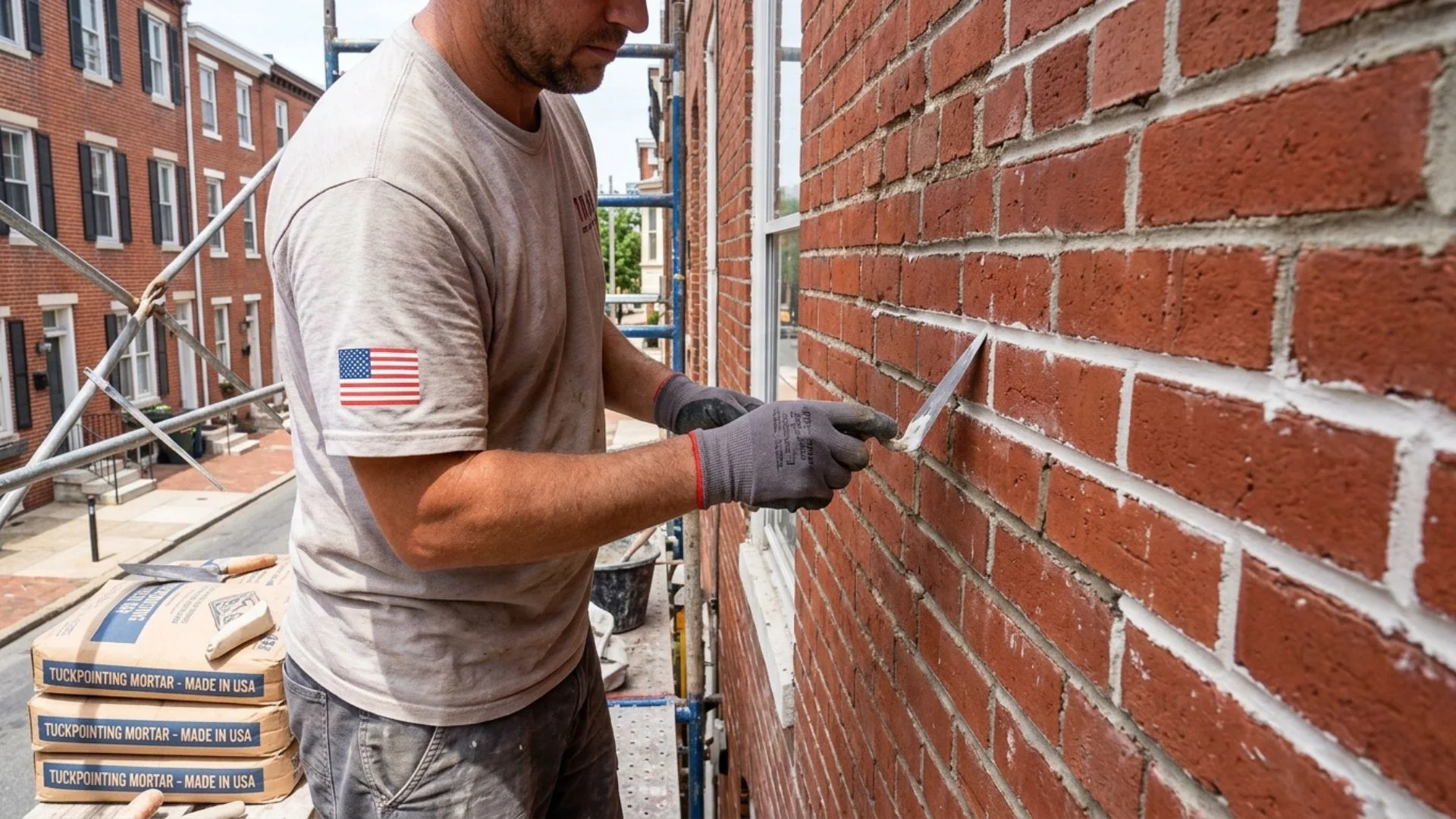
Tuckpointing is a refined form of joint finishing. After deteriorated material is carefully removed, the joint is filled with new material and finished with a fine, contrasting "tuck" line. Traditionally, the base material is matched to the surrounding brick while the narrow line creates a crisp, defined appearance.
The technique combines functional joint maintenance with a decorative finish. That makes it particularly suitable for street-facing brownstones, historic properties, rowhouses, and brick facades where appearance matters alongside weather protection.
But Remember...
This differs from basic repointing, which primarily involves removing failed joint material and replacing it to restore the weather-resistant function of the wall. Spot pointing is narrower still, addressing isolated cracks, holes, or small areas rather than an extensive section.
| Service | What It Involves |
|---|---|
| Tuckpointing | Joint rehabilitation combined with a contrasting tuck line for a crisp, decorative finish. |
| Repointing | Replacement of deteriorated joint material to restore weather resistance, without a contrasting decorative line. → See Repointing Services |
| Spot Pointing | Localised treatment for isolated cracks, gaps, or small areas of deterioration. → See Spot Pointing Services |
Brick exteriors are exposed to rain, snow, temperature changes, pollution, wind, and years of seasonal expansion and contraction. Once joint material begins to deteriorate, the surrounding wall becomes more vulnerable to moisture and progressive damage.

Open, cracked, or crumbling joints can provide a direct route for rainwater to enter the wall. Continued moisture exposure may contribute to staining, interior dampness, plaster deterioration, brick damage, and corrosion around embedded metal components. Addressing failing joints early can therefore be less disruptive than waiting until water infiltration or related deterioration requires extensive exterior work.
Buildings covered by the Facade Inspection & Safety Program may require exterior wall inspections on a five-year cycle. During these inspections, a Qualified Exterior Wall Inspector can identify conditions requiring maintenance or corrective work. Our team does not replace the role of the QEWI. The qualified professional remains responsible for the required inspection, technical assessment, and filing.
For a detailed explanation of the inspection process and our support, visit our Local Law 11 / FISP compliance page.
→ Local Law 11 / FISP Mortar Repair
Deteriorated joints are easy to notice on a brownstone or street-facing property. Missing sections, inconsistent colour, dark staining, and crumbling material can make an otherwise well-maintained building look neglected. For historic properties, visual consistency is especially important. A poorly matched joint can stand out almost as much as the original deterioration.
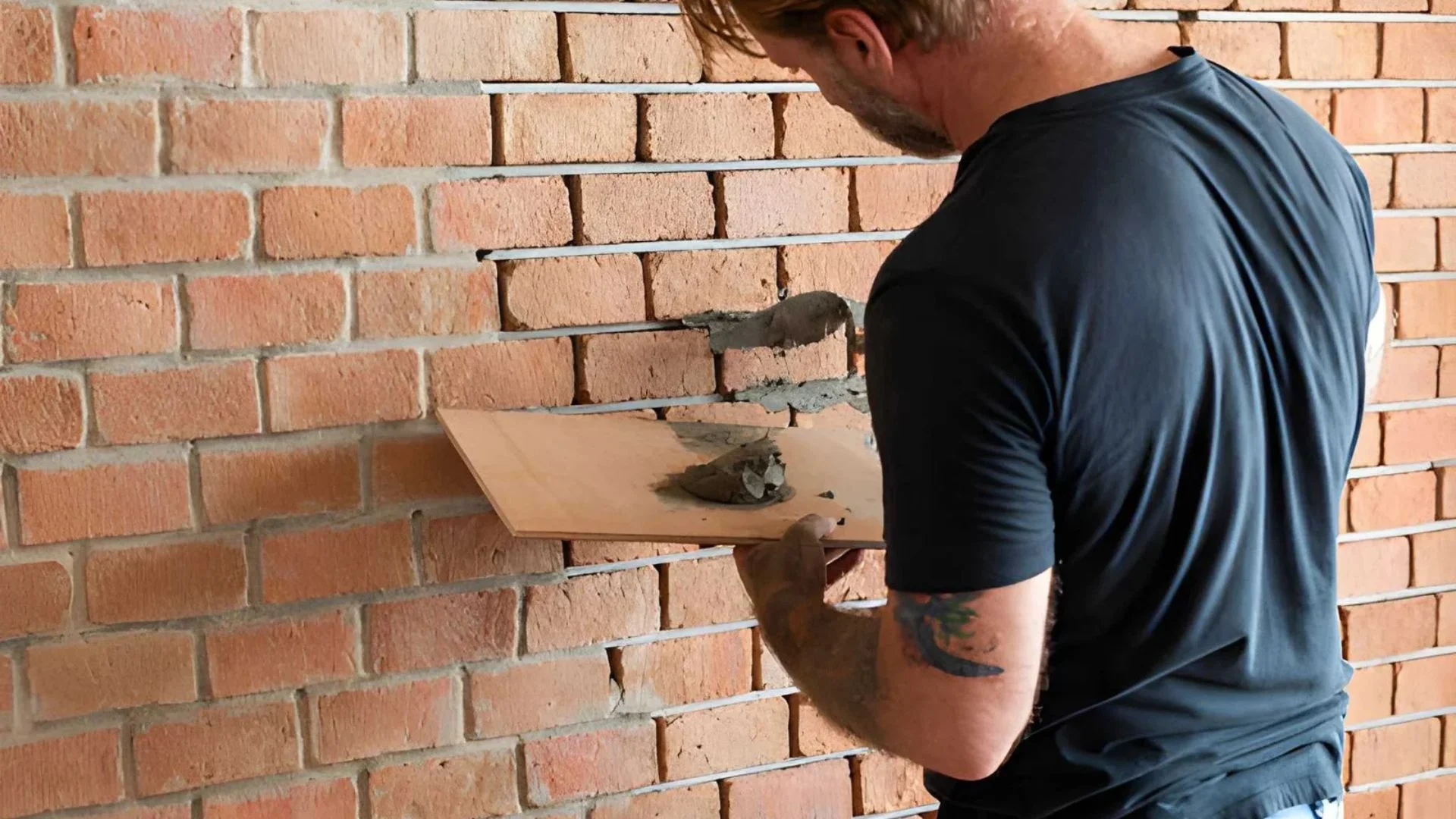
We begin by examining accessible brickwork and identifying deteriorated, cracked, loose, or missing joints. We also look for related concerns such as damaged bricks, corroded lintels, displaced sections, staining, and visible signs of moisture entry. The assessment helps determine whether the property needs isolated work or a broader scope.
Existing deteriorated material is removed to an appropriate depth while taking care not to damage surrounding brick edges. This stage requires control and patience. Aggressive removal can damage historic brick, especially on older properties where the masonry may be softer than modern materials.
For brownstones, pre-war buildings, and historic facades, we assess existing colour, sand grain, aggregate, texture, and joint appearance before selecting replacement material. The objective is to create a compatible finish rather than introduce an obviously different strip of new material across an older wall.
The prepared joint is filled with the selected material. Once the base has been prepared, the fine contrasting line is applied to create the characteristic defined appearance. Attention to joint profile and finishing helps the completed work integrate with surrounding brickwork.
After completion, the area is cleaned and excess material is removed. Where documentation is useful for a co-op board, property manager, engineer, or FISP-related project, we can provide photographs and relevant details showing the completed scope.
Our work is suitable for a range of property types, including:
Older buildings often need a more careful material-matching approach than newer construction. We account for existing brickwork and visual character when developing the scope.
We provide tuckpointing services throughout all five boroughs:
From historic residential blocks to larger multi-family properties, our team works across the city's diverse building stock.
→ See Full Service Area Details
Get Your Free Tuckpointing Estimate
Pricing depends on the amount of deteriorated joint material, wall height, access, scaffolding requirements, brick condition, and overall project scope. Small sections can start in the low thousands, while extensive facade projects cost considerably more. We provide an itemized estimate after assessing the property so you can see exactly what is included.
Properly executed work can last for decades when the replacement material is compatible with existing brick, joints are prepared correctly, and the finished work is properly tooled. Poor preparation, unsuitable material, excessive exposure, or rushed installation can shorten the service life considerably.
No. Repointing focuses on replacing deteriorated joint material for functional protection. Tuckpointing incorporates that joint work with a contrasting decorative line.
Permit requirements depend on the scope, building conditions, access equipment, and whether additional exterior work is involved. Projects requiring scaffolding, sidewalk protection, or other regulated construction measures may involve additional approvals. We can discuss access and project requirements during the initial assessment.
It can, when deteriorated joints are among the conditions identified within the required facade inspection and corrective scope. The appropriate work should follow the recommendations of your engineer or QEWI. We can perform the physical work and provide relevant completion documentation, while the qualified professional handles the required inspection and filing.
Yes. Historic properties often require careful attention to colour, sand grain, texture, joint profile, and surrounding materials. We aim to make new work visually compatible with existing 19th- and early 20th-century brickwork rather than creating an obvious modern-looking patch.
Protect your brick facade before deteriorated joints become a larger moisture or structural concern. Whether you have an older brownstone, a rowhouse, a co-op, or a commercial property, we can assess the condition and provide a clear scope of work.