
+1 (917) 352-1191
Phone number
info@tuckpointingnyc.com
Email address
2 W 46th St, New York, NY 10036
Address location
If you own, manage, or sit on the board of a New York City building taller than six stories, façade inspections are something you need to plan for. The city's FISP, commonly associated with Local Law 11, requires covered buildings to undergo recurring exterior inspections and file an acceptable technical report with the NYC Department of Buildings.
That can sound complicated when you first encounter it. This guide walks you through the system so you can understand what is coming, prepare your property, and know when to involve your QEWI, engineer, or repair contractor.
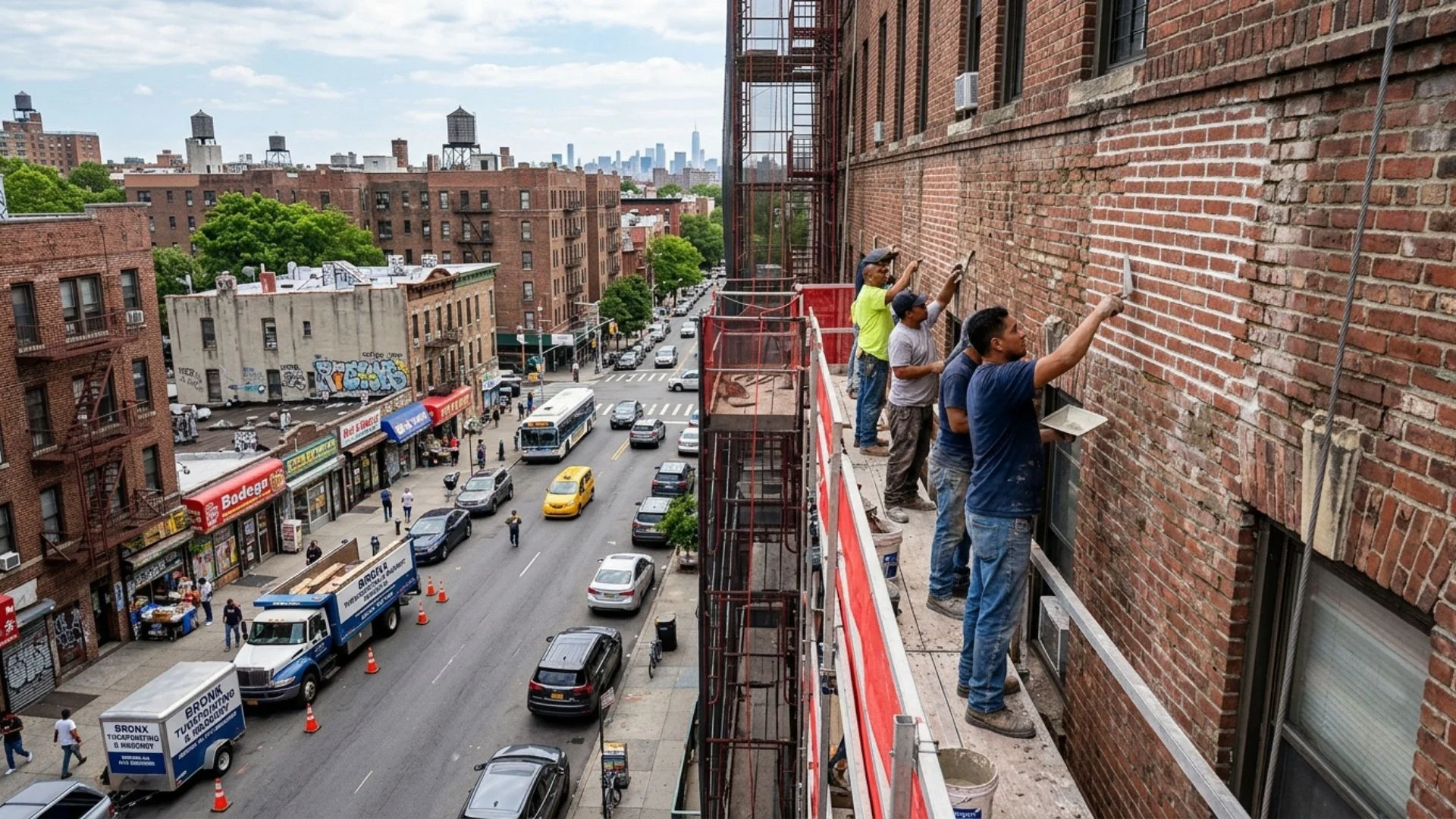
The façade inspection requirement traces back to New York City's Local Law 11 of 1998, which followed earlier façade-safety legislation introduced after a series of incidents involving falling building material.
Today, the programme is administered by the NYC Department of Buildings as the Façade Inspection & Safety Program. You will still hear property professionals, managing agents, engineers, and contractors use both "Local Law 11" and "FISP" when discussing the requirement.
The important point for you is simple.
If your building is covered, the inspection and reporting obligation does not disappear because the façade looks acceptable from the sidewalk.
The inspection programme operates on five-year cycles. Each cycle is divided into three filing sub-cycles, A, B, and C.
Your building's sub-cycle is determined by the last digit of its block number. The staggered system spreads filing deadlines across three years rather than requiring every covered property to submit at the same time.
Before you start budgeting for work, check your property's block number and current filing status. That one detail tells you which deadline you are working towards.
Cycle 10 began on February 21, 2025. The current filing windows are:
Block numbers ending in 4, 5, 6, or 9. Deadline: February 21, 2027.
Block numbers ending in 0, 7, or 8. Deadline: February 21, 2028.
Block numbers ending in 1, 2, or 3. Deadline: February 21, 2029.
These dates come directly from the Department of Buildings' Cycle 10 schedule. If your deadline is still months away, that does not mean you should wait. Engineering coordination, board approvals, estimates, permits, and façade work can take time.
After the required exterior examination, a Qualified Exterior Wall Inspector (QEWI) submits the technical report and assigns one of the programme's classifications.

A Safe classification means the exterior walls and appurtenances were found to have no hazardous conditions requiring correction under the report. That does not mean you can forget about the façade. Your next inspection cycle will still come around, and ordinary maintenance remains important.
SWARMP means the façade is considered safe, but identified conditions require repair and maintenance according to an established programme. Mortar deterioration, for example, may not present an immediate public hazard but can still need correction before the next inspection cycle.
An Unsafe classification means the exterior condition presents a public-safety concern. Immediate protective measures are required, and the owner must address the condition rather than simply carrying it into the next cycle. Depending on the circumstances, public protection such as a sidewalk shed or other safeguards may be required.
NYC rules also establish deadlines and penalties connected with correcting unsafe conditions.
The required work should be documented and managed according to the applicable report and filing requirements. If your property receives a SWARMP classification, don't treat it as a "nothing is wrong" result. It means there are known conditions that need to be addressed.
The condition that creates a compliance problem is not always huge. Deteriorated mortar joints, loose or spalled brick, displaced masonry, parapet problems, and lintel-related deterioration can all appear during an exterior examination.
You may also notice warning signs yourself: cracked brick around windows, rust staining below steel lintels, open joints, recurring water staining, or masonry pieces collecting on lower ledges.
If you want to understand what different mortar problems look like before calling someone, see our guide to reading mortar damage. A contractor can address the physical condition, but the official inspection and classification belong to the qualified professional responsible for the filing.
Missing your filing deadline can become expensive quickly. NYC currently lists a $1,000 monthly penalty for late filing of an initial façade report and a $5,000 annual penalty for failure to file. Separate penalties can apply when unsafe or qualifying SWARMP conditions are not corrected.
For a building owner or board, that means delaying the process can create costs beyond the repair itself. If you have already missed a deadline, do not assume the only option is to start over. The Department provides procedures for resolving façade violations, including filing an acceptable report and addressing outstanding penalties.
You do not need to wait for your filing window to begin preparing. Start by reviewing the previous technical report and checking whether recommended maintenance or repairs were completed.
Then walk the property with your managing agent or maintenance team. Look for obvious deterioration around parapets, windows, cornices, balconies, and other exposed masonry areas.
It also helps to:
The earlier you understand the condition of your façade, the more options you generally have for planning the work.
They are commonly used to describe the same façade-safety programme. "Local Law 11" refers to the legislation behind the requirement, while FISP is the current name used by the NYC Department of Buildings for the inspection programme.
Check the last digit of your property's block number. For Cycle 10, digits 4, 5, 6, and 9 fall into Sub-Cycle A; 0, 7, and 8 fall into B; and 1, 2, and 3 fall into C. You can also verify your property's status through NYC Department of Buildings resources.
The inspection classification is part of the technical report filed by the QEWI. If you believe there is a disagreement about the condition or classification, discuss it with the professional responsible for your report and determine what filing or correction process applies.
The required technical examination and filing are handled by a Qualified Exterior Wall Inspector. A contractor can perform resulting repair work, but the contractor does not substitute for the professional responsible for the official façade report. For the current programme requirements, filing procedures, and official notices, always verify the latest information with the NYC Department of Buildings.
If your inspection has identified deteriorated mortar, damaged brick, parapet problems, lintel deterioration, or another exterior condition, the next step is understanding the actual repair scope.
We can inspect the affected areas and provide a clear repair plan and itemised estimate that you can review alongside your engineer's or QEWI's recommendations.