
+1 (917) 352-1191
Phone number
info@tuckpointingnyc.com
Email address
2 W 46th St, New York, NY 10036
Address location
Worn mortar joints can allow water into wall assemblies, damage interior finishes, and gradually weaken masonry. NYC Tuck Pointing team provides targeted joint renewal for residential and commercial properties throughout the five boroughs. Our goal is to keep water out while preserving the character and performance of the existing facade.
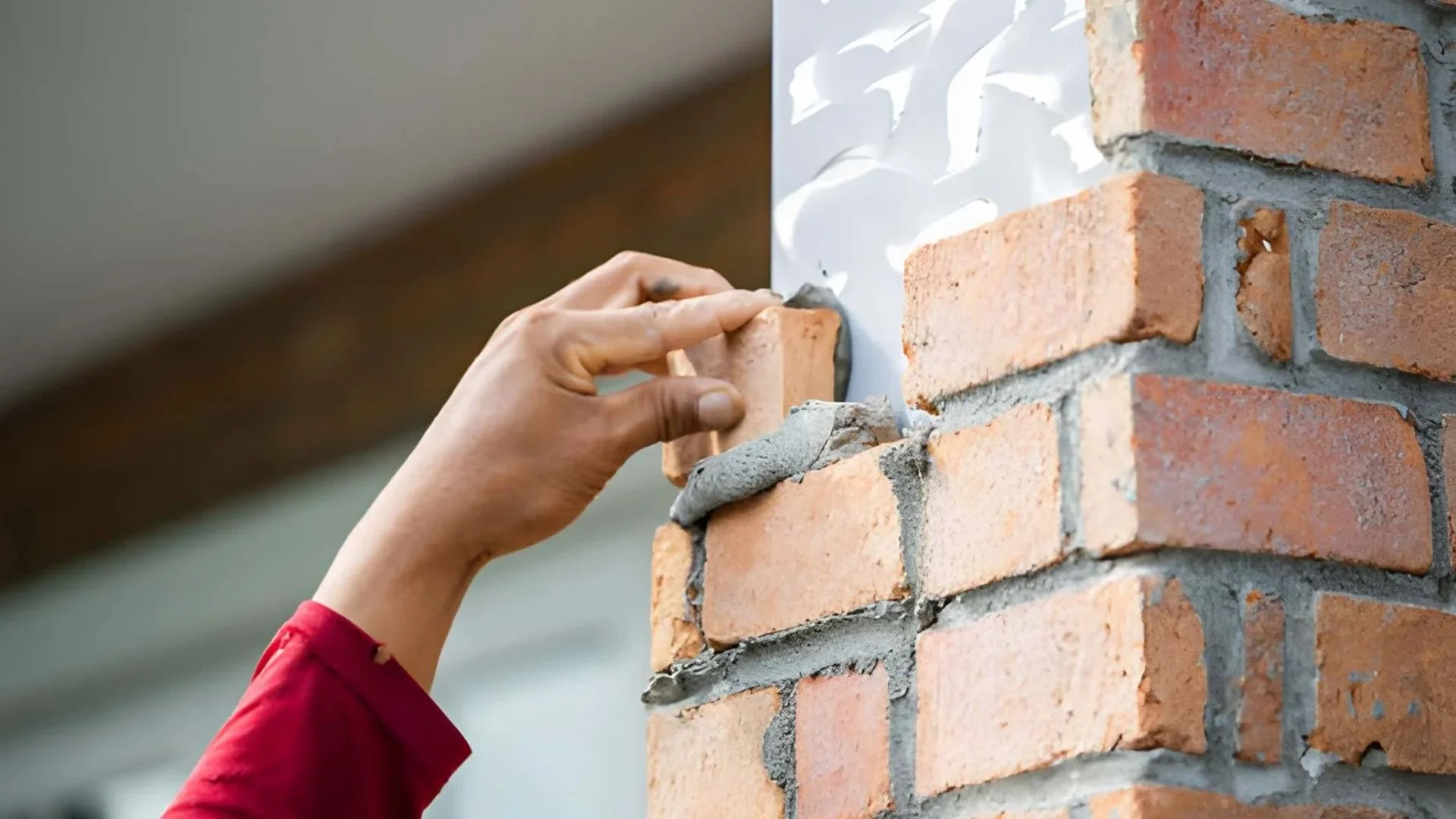
Repointing involves removing failed mortar from the joints between masonry units and replacing it with new material. It is commonly needed when joints have become cracked, recessed, powdery, loose, or vulnerable to moisture. Unlike replacing an entire wall, this approach addresses the deteriorated joints while retaining sound masonry units in place.
This process removes damaged joint material to an appropriate depth before the cavities are cleaned and filled with compatible mortar. Proper preparation matters. Simply applying new material over loose or deteriorated material can leave underlying problems unresolved.
Tuckpointing uses contrasting mortar or a fine raised line to create a defined joint appearance. It can provide a decorative finish while also addressing joint deterioration. For a dedicated service covering this technique, see our NYC tuckpointing service.
Spot pointing addresses small, isolated areas where deterioration is limited. It can be appropriate when most joints remain sound and only selected sections require attention. For more extensive joint deterioration, a broader assessment may be necessary. See our spot pointing service.
Open or deteriorated joints can allow moisture behind the exterior surface. Once water enters the wall assembly, it may contribute to staining, dampness, peeling finishes, mould growth, or damage around interior walls.
The visible symptom may appear indoors even though the source is outside. During an inspection, we look for conditions such as:
The appropriate repair depends on the extent and location of deterioration.
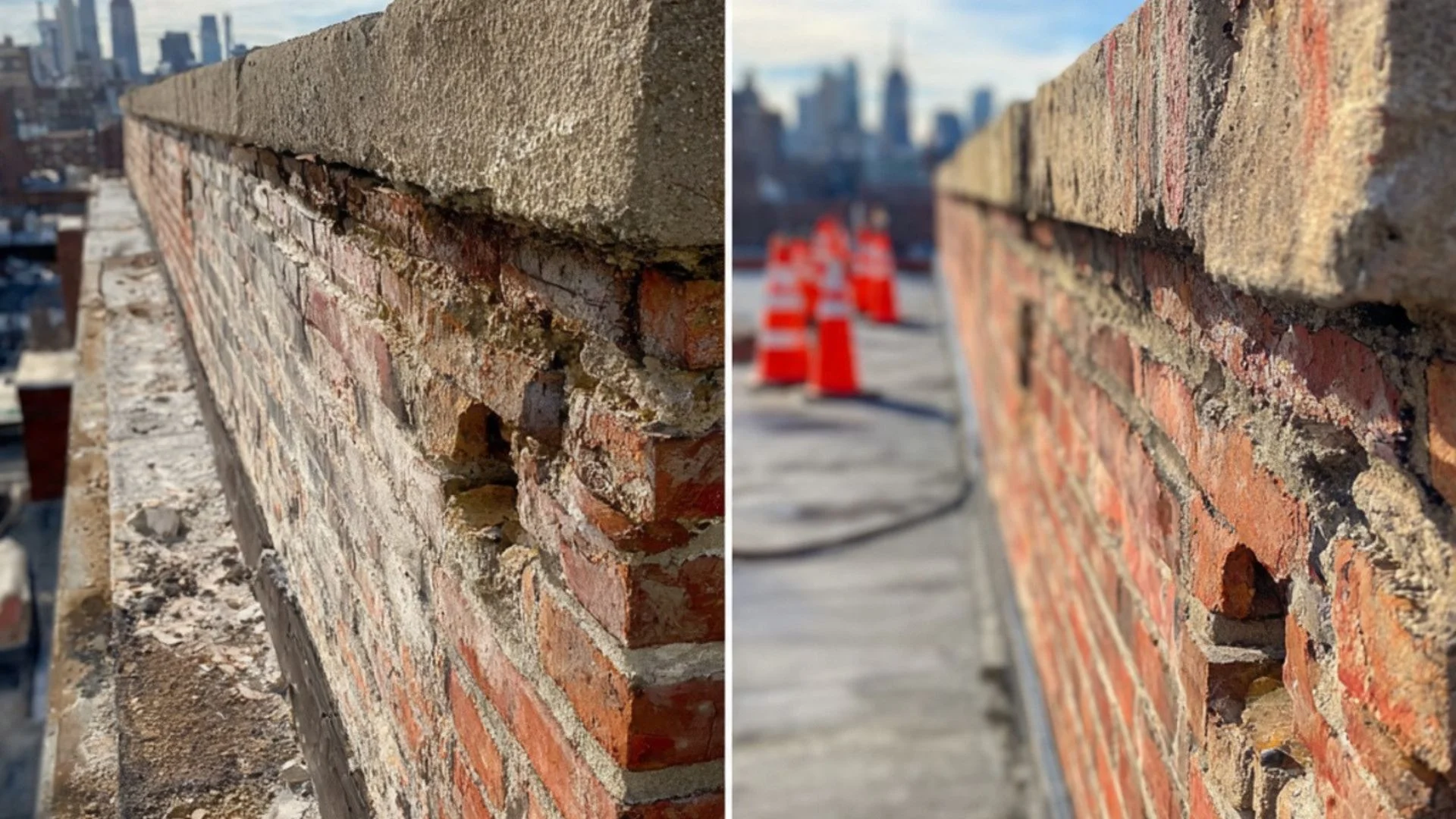
When moisture has affected a property, documentation can be useful for owners, property managers, insurers, and co-op boards. We can document visible deterioration and the recommended corrective work.
Insurance coverage depends on the individual policy and circumstances. Our documentation does not determine coverage or guarantee reimbursement.
Mortar joints help distribute loads and protect the edges of masonry units from direct exposure. Significant deterioration can leave gaps where water and debris collect.
Addressing damaged joints as part of ongoing exterior maintenance can help preserve the wall assembly and reduce the risk of more extensive deterioration. If damaged masonry units are also present, see our brick repair service.

We examine accessible areas for joint erosion, cracking, gaps, moisture entry, previous repairs, and related masonry concerns. The inspection helps determine the extent of deterioration and whether the affected area requires localised work or broader treatment.
Where appropriate, deteriorated material is carefully removed from the affected joints. The depth and method depend on the existing construction and condition. Loose debris is cleared so the replacement material can properly bond with the surrounding masonry.
Mortar compatibility is especially important on older buildings. The replacement material should be selected with consideration for the existing masonry, joint profile, colour, texture, and construction period. Using an unnecessarily hard material on older masonry can create additional stress around softer units.
Prepared joints are filled with compatible mortar to achieve the required profile. Attention is given to joint depth, consolidation, finish, and the transition between repaired and existing sections.
Excess material and debris are removed after the work. The completed area is reviewed for consistency and visible defects. Where requested, we provide documentation describing the completed scope and observed conditions.
Our exterior masonry work is suitable for a range of property types, including:
Historic properties often require additional attention to existing materials, joint profiles, and appearance. Our assessment considers these details before work begins.
For chimney-specific masonry concerns, visit our chimney pointing service. Parapet deterioration can also require a different repair strategy, covered on our parapet wall repair page.
We serve property owners, managers, boards, and building stakeholders across all five boroughs.
From historic townhouses to apartment and commercial properties, we assess deteriorated mortar joints throughout Manhattan. See our Manhattan masonry services.
Brooklyn contains a wide range of older masonry construction, including rowhouses, brownstones, apartment buildings, and commercial properties. See our Brooklyn masonry services.
We provide exterior joint restoration for residential and commercial properties across Queens. See our Queens masonry services.
Older facades and multi-family properties can develop significant joint deterioration from prolonged weather exposure. See our Bronx masonry services.
We serve residential and commercial properties throughout Staten Island with inspection-led masonry maintenance. See our Staten Island masonry services.
Since 2004, our team has worked with masonry properties requiring careful exterior maintenance and restoration. Our approach focuses on identifying the actual cause and extent of deterioration before recommending work.

Standard repointing focuses on replacing deteriorated mortar within existing joints. Tuckpointing can include a contrasting finish line that creates a more defined decorative appearance. The appropriate method depends on the property's condition, existing construction, and desired finish.
Look for open joints, missing material, cracking, crumbling mortar, recessed areas, or recurring moisture problems around exterior walls. If deterioration is widespread, an inspection can determine how much work is required.
It can address deteriorated joints that are allowing water to enter, but an active leak may have several possible sources. Roof edges, coping, windows, flashing, parapets, chimneys, and other facade elements may also contribute to water entry. The source should be identified before assuming joint work alone will resolve it.
An incompatible mortar can create problems, particularly on older masonry. Material selection should account for the characteristics of the existing units and the original construction. This is why matching the existing assembly is an important part of the preparation process.
The duration depends on the size of the affected area, access requirements, joint condition, weather, and the amount of preparation required. A small localised section may be completed relatively quickly, while extensive facade work can require considerably more time.
Yes. When requested, we can provide documentation describing observed conditions, recommended work, and the completed scope. For properties subject to facade inspection requirements, documentation can also support the property's maintenance records.
Deteriorated mortar should not be ignored when you are already seeing water entry, open joints, crumbling material, or recurring interior damage. Contact us at (917) 352-1191 to request a free inspection and itemised estimate for your property.