
+1 (917) 352-1191
Phone number
info@tuckpointingnyc.com
Email address
2 W 46th St, New York, NY 10036
Address location
Repointing and brick repair address damage that already exists. Waterproofing helps prevent water from penetrating sound masonry after those repairs are complete. We provide masonry waterproofing across all five boroughs, with the work often coordinated with repointing or brick repairs when the inspection shows that existing defects need to be addressed first.
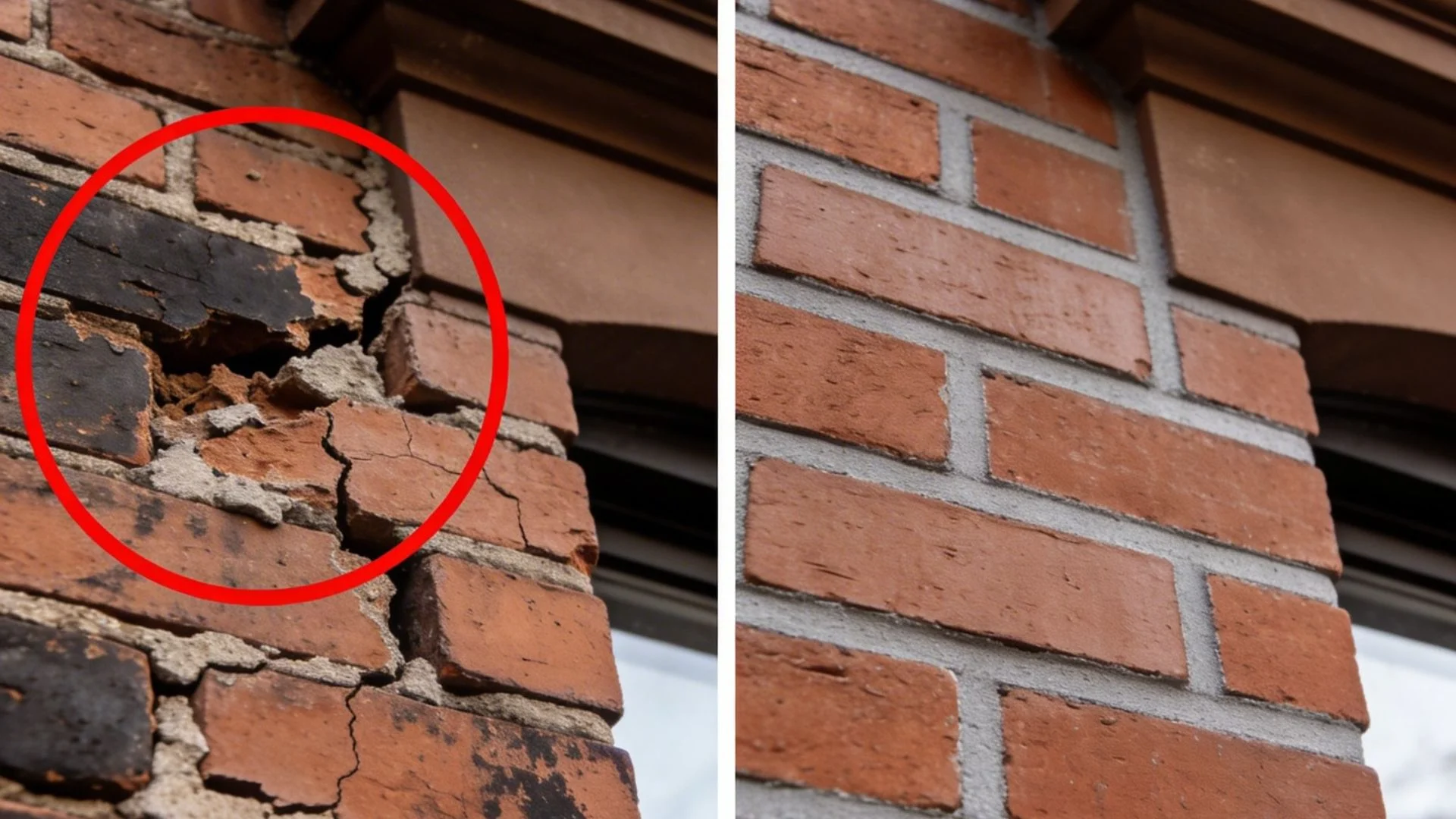
Masonry waterproofing involves applying a water-repellent coating, sealant, or compatible protective treatment to brick, stone, or other masonry surfaces. At NYC Tuck Pointing, our objective is to reduce water absorption while allowing the wall assembly to manage moisture appropriately.
This service does not replace deteriorated mortar or damaged brick. If joints are failing or individual units are cracked, spalled, or otherwise compromised, those conditions should be addressed before the protective treatment is applied.
A protective treatment applied to suitable masonry to reduce future water penetration. It is most effective when the substrate is sound or when necessary repairs have already been completed.
Repointing replaces deteriorated mortar joints between masonry units. It addresses the joints themselves rather than acting as a protective surface treatment.
See our Brick Pointing & Repointing service for full-wall mortar restoration.
Brick repair addresses damaged masonry units, including conditions such as cracking, spalling, or localized deterioration. See our Brick Repair service when individual brick units require correction before protection is applied.
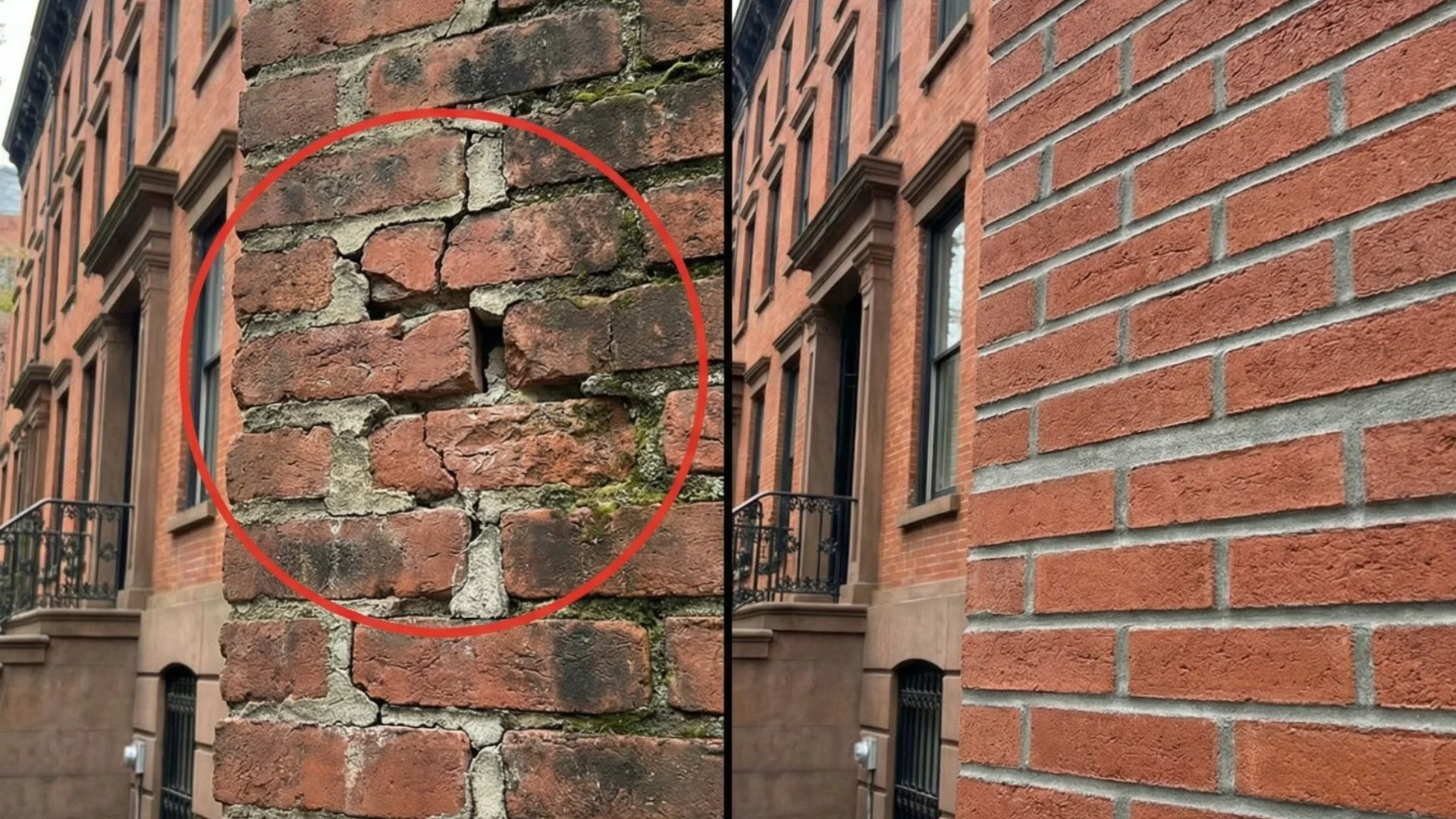
For co-op and condo boards, preventative exterior maintenance can be easier to plan when it is identified before an emergency develops. A scheduled protective treatment may form part of a broader reserve-fund maintenance plan alongside inspections, joint restoration, brick repairs, and other exterior work.
Newly restored mortar joints and repaired brick still face the same exterior exposure as the surrounding wall. After appropriate curing and preparation, a compatible protective treatment can help reduce water absorption across the repaired area. This makes the service particularly relevant when exterior restoration has already required an investment.
Exterior water intrusion can eventually appear inside the building. Depending on where moisture enters and how the wall is constructed, the result may include staining, deteriorated plaster, peeling finishes, damp areas, or conditions that contribute to mold growth.

We begin by examining the exterior surface for conditions that could allow water to enter. Our assessment looks at mortar joints, brick or stone surfaces, visible cracks, deterioration, previous repairs, and other areas of concern. If failed joints or damaged units are present, we identify those areas before recommending a protective treatment.
A protective coating needs a suitable surface. We clean the affected area and prepare it according to the condition of the substrate and the selected treatment. Where necessary, damaged mortar or brick is repaired before the application stage.
Once the surface is ready, we apply the selected water-repellent coating, sealant, or compatible treatment. Product selection depends on the masonry type, existing condition, exposure, and project requirements. For older buildings, breathability is particularly important because the treatment should reduce external water absorption without unnecessarily preventing moisture within the wall from escaping.
After application, we complete the site cleanup and review the finished work. Photo documentation can be provided for property managers, co-op boards, condo boards, and building records. Keeping photographs and project information together can help boards track completed maintenance and plan future inspections.
Our service is suited to property owners and building teams looking to address exterior moisture exposure as part of planned maintenance.
The appropriate scope depends on the building's construction, condition, exposure, and maintenance history. An inspection helps determine whether protective treatment is appropriate and whether related repairs should be completed first.
Exterior maintenance for residential, multi-family, and commercial properties throughout Manhattan.
Protective treatments for brick and other exterior masonry across Brooklyn properties.
Building owners and property managers can request an inspection for exterior moisture concerns throughout Queens.
We assess exterior wall conditions and coordinate related repair work where required.
Protective exterior maintenance is available for qualifying residential and commercial properties throughout Staten Island.
The right treatment starts with the condition of the wall, not with a one-size-fits-all coating.
Our approach keeps the protective treatment connected to the condition of the building. If the wall needs repair, we identify that requirement rather than presenting a coating as a substitute for structural or masonry restoration.
If the mortar joints are deteriorated, they should generally be repaired before the protective treatment is applied. Covering failed joints does not correct the underlying deterioration. The two services can often form part of the same project. We inspect the wall first, identify areas requiring joint restoration, complete the necessary preparation, and then determine when the surface is ready for protection.
Service life varies according to the product, substrate, application, weather exposure, building conditions, and ongoing maintenance. Rather than assigning one lifespan to every project, we consider the specific surface and treatment selected. Periodic inspection can help identify when reapplication or additional maintenance may be appropriate.
The risk depends on the product and the wall assembly. For older masonry, selecting a compatible and sufficiently breathable treatment is important. The goal is to reduce external water penetration without unnecessarily preventing moisture already within the wall from escaping.
It can be a practical preventative maintenance item when the building's exterior condition makes protection appropriate. For boards, the benefit is primarily planning. Addressing exterior water exposure during scheduled maintenance may help reduce the chance that a manageable exterior issue develops into a larger interior repair or emergency project.
No. A protective coating is not a substitute for diagnosing and repairing an active leak. If water is entering through failed mortar, damaged brick, cracks, joints, or another exterior defect, the source needs to be identified and addressed first. Once the surface is suitable, protection may be considered as part of the completed repair strategy.
Many modern treatments are designed to have minimal visual impact, but the final appearance depends on the product, substrate, and application. Before work begins, we can discuss the intended finish and how the selected treatment is expected to affect the existing surface.
Exterior protection is most useful when it is planned around the actual condition of the building. A free inspection can identify areas where water exposure may warrant preventative treatment, as well as any repointing or brick repairs that should happen first.